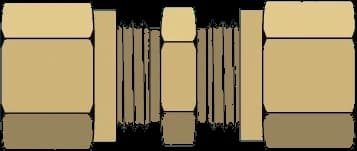
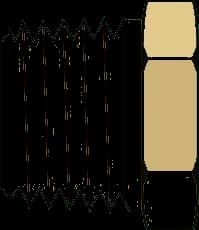
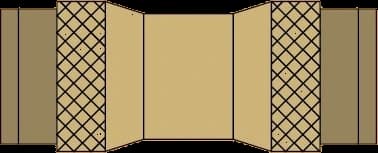
ORFS Fittings — O-Ring Face Seal (SAE J1453) Guide
How to identify ORFS (O-Ring Face Seal) fittings: an O-ring seated in a groove on the flat face of the fitting that compresses against a flat mating face for a leak-tight elastomeric seal, made to the SAE J1453 standard.
Other fitting tiles
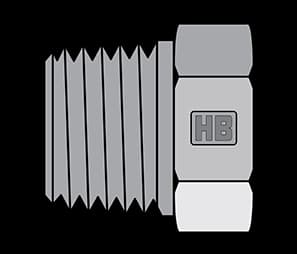
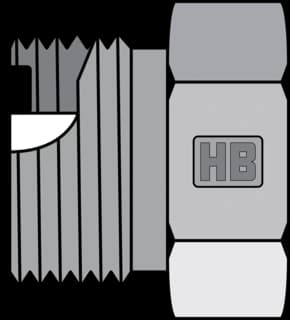
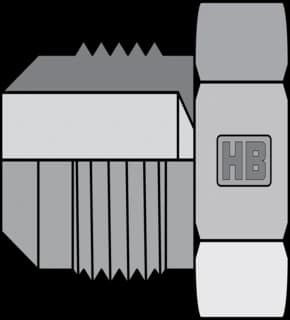
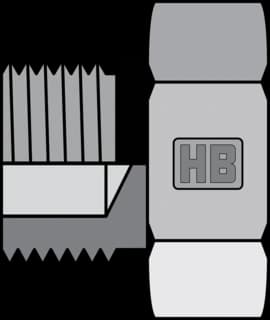
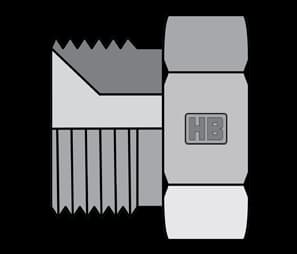
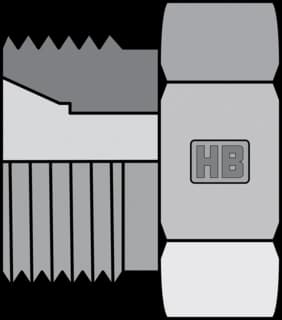
As the name implies, ORFS, or (O-ring Face Seal) fittings incorporate an O-ring at the face of the fitting. Made to SAE J1453 standard, ORFS connections are commonly manufactured in carbon, nickel plated carbon & Stainless steel and typically use Buna-N or Viton, 90 Durometer O-rings that seat into a groove in the face of the fitting. This is known as an elastomeric seal.
The seal is created when the o-ring compresses between the o-ring face of the fitting and flat face of the mating ORFS fitting or the formed tube. When the connection is tightened the O-ring compresses against a flat face of mating fitting or tube.
How to identify ORFS
- A flat face on the fitting with an O-ring seated into a machined groove in that face.
- Made to the SAE J1453 standard.
- O-rings are typically Buna-N or Viton at 90 Durometer.
How ORFS seals
ORFS uses an elastomeric seal. The seal is created when the O-ring compresses between the O-ring face of the fitting and the flat face of the mating ORFS fitting or the formed tube. When the connection is tightened, the O-ring compresses against the flat face of the mating fitting or tube.
The O-ring does the sealing, not the threads
On an ORFS connection the threads are mechanical — the leak-tight seal comes entirely from the O-ring being compressed between the two flat faces. This elastomeric face seal makes ORFS a popular choice for high-pressure, high-vibration hydraulic systems.
Materials
ORFS connections are commonly manufactured in:
- Carbon steel
- Nickel plated carbon steel
- Stainless steel
The O-rings are typically Buna-N or Viton at 90 Durometer.